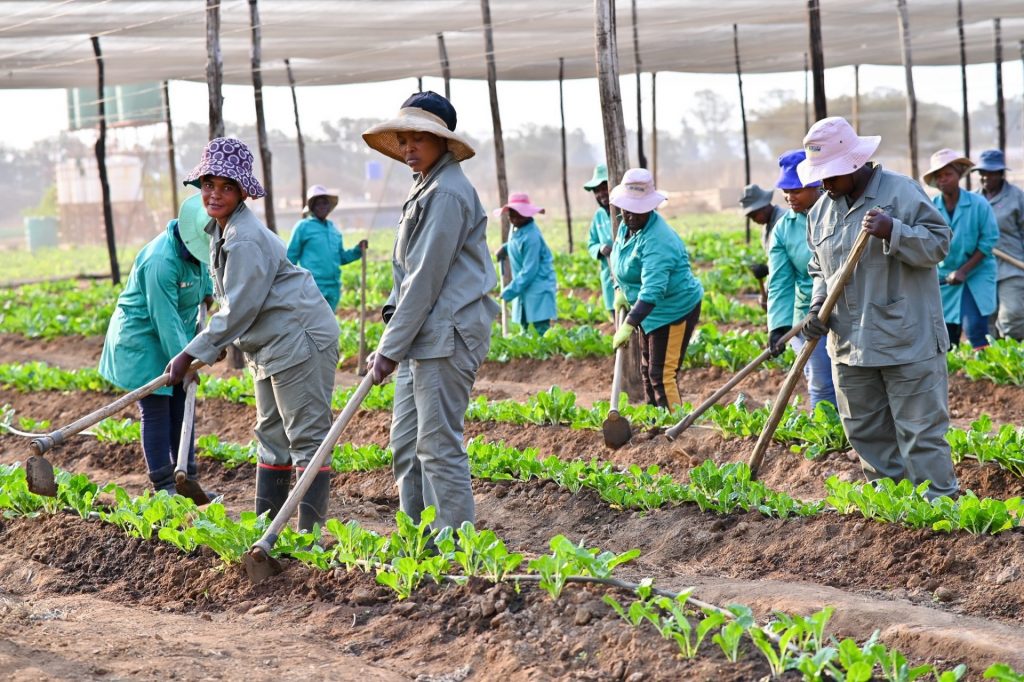
As South Africans commemorated Freedom Day and reflected on more than three decades of democracy, SPAR South Africa said the country should also recognise the everyday forms of economic participation made possible since 27 April 1994.

For SPAR, freedom is not only a constitutional principle. It is visible in its purpose of unleashing the power of independent retail. We are driven by the ability to support the independent store owner who opens their doors each morning, the local supplier whose produce reaches store shelves, the employees who earn a livelihood close to home, and the customers who support businesses in their own communities.
“Freedom becomes real when people can participate meaningfully in the economy,” says Reeza Isaacs, CEO of The SPAR Group. “That is why SPAR’s model is built around independent ownership, local decision-making and community-based retail.”
Unlike a fully centralised retail model, SPAR’s approach places ownership and operational decision-making in the hands of independent retailers. These store owners understand the needs of the communities they serve, employ local people and help ensure that economic value remains close to home.
Because many SPAR retailers are deeply embedded in their communities, they also support local suppliers, small businesses and community initiatives. In this way, the store becomes more than a point of trade. It becomes part of the local economic ecosystem.
But true inclusion cannot be limited to urban centres. It must also reach rural communities, where access to markets, infrastructure and commercial support remains limited.
This is why SPAR has invested in local sourcing, supplier development and rural hub initiatives aimed at helping emerging farmers move from subsistence farming to sustainable agribusiness.
“Small-scale rural farmers are pivotal to a more inclusive and sustainable future,” says Isaacs. “Their development supports food security, affordability, nutrition and job creation in rural communities.”
Since 2016, SPAR had supported emerging commercial farmers with agricultural and business expertise, helping them improve productivity, grow high value crops and access formal retail markets.
A key part of this work was SPAR’s Rural Hub model, which used strategically placed packhouses as aggregation and distribution points. These hubs connected rural farmers to markets they would otherwise struggle to reach, while linking their produce into SPAR’s broader distribution and store network.
As farmers became more commercially sustainable, the benefits extended beyond the farm gate. Jobs were created, local supply chains strengthened and rural communities gained new routes into the formal economy.
While initiatives such as the Rural Hub played an important role in supporting emerging farmers, they formed part of a much broader economic contribution.
As the second largest food retail business in South Africa, SPAR’s greatest impact is driven through its network of independent retailers and its strong focus on local sourcing. Through this model, the Group supported widespread job creation and sustained livelihoods across communities, while helping ensure that economic value is created and retained within the country.
“As South Africa continues its journey towards inclusive growth, Freedom Day is an opportunity to reflect not only on the rights we have secured, but on how we expand participation in the economy,” says Isaacs.
“At SPAR, we are proud to stand alongside our independent retailers, suppliers and farming partners in building a future where freedom is not only celebrated but lived every day in communities across South Africa.”
